
Interstate Moving Regulations

Updated: Jun 16
When you prepare to pack up your life and move across state lines, you enter a strict legal territory governed by federal transportation codes. Hiring traditional Pittsburgh movers or scheduling specialized commercial moving services means your transaction shifts from simple local rules to a complex framework of multi-state commerce.
This legal transition impacts your consumer rights, alters your cargo protection options, and changes how your final invoice must be structured.
We have found that navigating long distance moving quotes can be overwhelming without a clear understanding of the laws that govern the trucking industry. Selecting a licensed and insured commercial moving company or booking premium long-distance moving services requires an eye for legal compliance.
Choosing a team that understands these guidelines is the single most effective way to eliminate logistical vulnerabilities before loading day arrives.
Working with an experienced long distance moving company ensures that your shipment adheres strictly to all consumer protection parameters.
Whether you require commercial moving for an entire office or standard residential transit, understanding your carrier's legal obligations helps you avoid unexpected delivery surcharges.
Let's analyze the exact regulatory benchmarks that carriers must follow to manage your long-distance moving cost and secure your assets from start to finish.
What Federal Agency Governs Interstate Moving Regulations, and Why Does It Protect You?
The Federal Motor Carrier Safety Administration (FMCSA), an operating administration within the United States Department of Transportation (USDOT), is the primary regulatory body governing interstate moving regulations.
This federal entity establishes and enforces uniform commercial transport safety laws across state borders to protect consumers from unsafe commercial vehicle operations and fraudulent trade practices.
We view their oversight as the primary shield protecting consumers from the logistical vulnerabilities of long-distance shipping.
Any household goods relocation that crosses state lines falls strictly under federal jurisdiction as interstate commerce, distinguishing it completely from local transport.
While a move that stays entirely within one state is governed by local public utility commissions or state departments of transportation, interstate moves must adhere to the strict statutory guidelines of the FMCSA.
This clear jurisdictional boundary ensures that regardless of which state you leave or enter, your carrier must respect identical consumer protection laws.
State Moves vs. Local Moves
Interstate Moves (State-to-State): This includes any move that crosses a state line, drives through another state on the way, or leaves the country. These moves must follow FMCSA rules.
Intrastate Moves (Local): This includes moves that start and finish in the same state. These moves follow local state laws and state utility rules.
These federal rules specifically target rogue operators by outlawing hidden delivery surcharges that deviate from signed agreements, an illegal practice known as hostage load fraud.
Under federal law, it is a serious crime for a carrier to hold your physical belongings in an undisclosed warehouse to extort additional, unquoted fees.
The FMCSA maintains strict enforcement mechanisms, including heavy civil penalties and operational revocations, to eliminate these deceptive practices from the marketplace.
How Do USDOT and PennDOT Requirements Differ for Moves Leaving Allegheny County?
The moment a commercial vehicle leaves Allegheny County and crosses a state line, it is bound by Federal Motor Carrier Safety Administration rules.
These regulations mandate that any commercial vehicle configuration operating in interstate commerce with a Gross Vehicle Weight Rating (GVWR) over 10,001 pounds must possess an active USDOT registration.
This federal threshold captures nearly every standard box truck used in the professional moving industry, subjecting them to strict driver logging and vehicle inspection protocols.
Moves staying entirely within Pennsylvania are regulated locally under Pennsylvania Department of Transportation (PennDOT) and Pennsylvania Public Utility Commission (PUC) rules.
Local safety mandates and intrastate USDOT listings historically target heavier vehicle brackets starting at 17,001 pounds GVWR for certain intrastate classifications. This variance creates a distinct regulatory gap where a truck might be compliant for a local trip but completely illegal the moment it drives onto an interstate highway.
Weight and License Limits
Rules Group | Who Runs It? | Truck Weight Limit | Insurance Needed |
Interstate Rules | FMCSA / USDOT | Over 10,001 lbs | Public liability minimum carrier filing |
Intrastate Rules | PennDOT / PA PUC | Starting at 17,001 lbs | State-level utility insurance filing |
Hiring an unvetted operator who attempts to sneak a shipment across state lines without holding active federal interstate operating authority introduces immense legal and safety risks.
If an "intrastate-only" mover crosses a state line illegally, federal authorities can impound the commercial vehicle immediately during a roadside enforcement check, leaving your household cargo stranded.
Furthermore, these illegal operators rarely carry the required public liability insurance minimums, leaving you financially exposed if an accident occurs on the road.
How Can Consumers Instantly Verify That an Out-of-State Moving Company Is Legally Registered?
Every legitimate interstate household goods carrier must display a valid, active USDOT number and hold specific interstate operating authority from the FMCSA.
This operating authority is a legal license that permits a commercial carrier to transport household goods across multiple state lines for compensation.
We advise against engaging with any moving entity that cannot immediately provide these credentials in their initial marketing materials and written correspondence.
To verify a mover's operational authority, safety records, and current insurance standing, consumers should utilize official government databases safely. The FMCSA provides a public portal known as the Safety and Fitness Electronic Records (SAFER) System, which allows for a verified USDOT number lookup moving search.
Entering a carrier's unique identification number into this database reveals their current registration status, physical address, vehicle inspection histories, and active cargo liability insurance filings.
Signs of a Legal Moving Company
Active License Status: The SAFER website will show the word "Authorized" for household goods rather than a "Pending" or "Revoked" status.
Paid Insurance: The system confirms that the company has active public liability and cargo insurance under their real business name.
Good Safety Records: The company's truck inspection failure rates are lower than the normal national average.
It is equally important to navigate the crucial household goods broker versus motor carrier distinction during your research process. A registered household goods broker is a company that only markets, arranges, and coordinates the transportation of your cargo, but does not own trucks or employ movers.
A registered motor carrier operates physical trucks, employs the crew, and assumes direct handling liability for your items from origin to destination. Federal law requires brokers to explicitly state their status in all advertisements and to only book moves with FMCSA-registered motor carriers.
What Mandatory Documents Must an Interstate Moving Company Legally Provide to You?
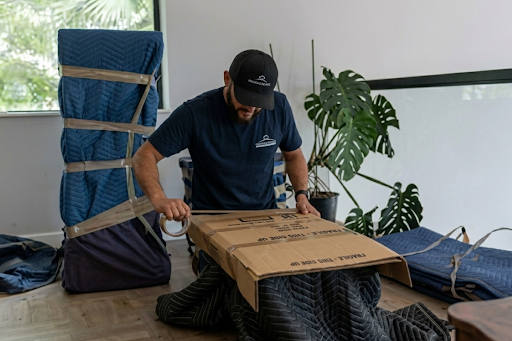
Federal consumer protection moving laws establish a mandatory paperwork trail designed to inform shippers of their legal rights before any physical labor begins.
Registered out-of-state movers in Pennsylvania are required by law to supply consumers with the official "Ready to Move" brochure and the comprehensive booklet titled Your Rights and Responsibilities When You Move.
Federal law requires interstate moving companies to provide these educational resources. These official federal publications outline your legal protections, dispute resolution options, and the exact operational obligations of your moving company.
Federal consumer protection standards dictate that the moving contract, combining the Bill of Lading and the inventory parameters, must be fully executed and provided to the shipper before loading operations officially begin.
This requirement grants shippers a penalty-free cancellation window, ensuring you have ample time to review the terms, rates, and conditions without facing logistical coercion on moving day.
Modern regulations also strictly prohibit forcing an individual to sign blank or incomplete paperwork under any operational circumstance. Every field, rate, valuation selection, and delivery window must be fully executed before you provide your signature, either via physical print or a secure e-sign platform.
Additionally, the moving crew must generate a verified itemized inventory log at the origin, cataloging the exact physical condition of every box and piece of furniture before it is loaded onto the truck.
Moving to another U.S. state does not require a passport or visa. Pet owners should also check the destination state, as many states require a Certificate of Veterinary Inspection for animals crossing state lines.
How Do Federal Rules Differentiate Between Binding and Non-Binding Moving Estimates?
Understanding the Interstate Bill of Lading requires knowing how federal rules handle the financial details of your estimate. Shippers must choose between two distinct legal frameworks when establishing their transportation rates, each carrying completely different rules for final payment.
Moving Price Options Compared
Feature | Binding Estimate Framework | Non-Binding Estimate Framework |
Pricing Certainty | Fixed price locked in before moving day | Rough approximation that varies by weight |
Primary Variable | Documented inventory item count | Certified truck scale weight ticket |
Payment Cap | Limited exactly to the stated contract figure | Capped at a specific percentage threshold upon delivery |
Weight Overruns | Carrier absorbs any extra weight costs | Shippers are billed for extra weight later |
A binding estimate guarantees the exact total cost of your move based on a virtual or in-person look at your home. When you sign a binding quote, the price cannot go up on delivery day as long as you do not add more items to your list.
This option gives you the most security because your final moving bill will match your original quote.
A non-binding estimate is just an educated guess, and the final price depends on how much your items weigh on official scales. The movers weigh the truck empty, load your things, and then weigh the truck again to find the exact weight of your items.
If the move weighs more than expected, federal guidelines state the company can only demand a small percentage above the estimated price at delivery, and they will bill you for the remaining balance later.
If a shipper adds items or requests additional packing services on moving day, old practices involving "revised estimates" are prohibited by federal guidelines. Instead, carriers must write a completely new, official superseding estimate before loading a single additional item into the vehicle.
This rules framework prevents movers from loading your goods first and then presenting an inflated invoice after your assets are locked inside the truck.
What Is the Regulatory Difference Between Full Value Protection and Released Value Cargo Coverage?
Federal interstate moving regulations require all registered carriers to provide two distinct levels of liability coverage to consumers.
Comparing the choices of Full Value Protection vs Released Value reveals a massive difference in how your belongings are valued if damage occurs during transit, so review the mover’s valuation coverage carefully if you are deciding whether to opt out of broader protection or pay for full replacement value.
Released Value Protection: This no-cost option is the minimum liability level required by law and covers a flat, nominal rate per pound per item.
Full Value Protection: This paid option makes the mover responsible for the full replacement value of items that are lost or damaged, subject to the terms of your shipment.
Federal rules also outline a strict timeline window: claims for lost or damaged goods must be filed within nine months of delivery. Movers must acknowledge complaints within 30 days, and disputes must be resolved within 120 days under FMCSA rules.
Cargo Coverage Frameworks Compared
Released Value Protection (Standard Baseline): Included at no extra cost; pays a baseline, flat rate calculated strictly by the pound per article rather than the actual replacement value of the item.
Full Value Protection (Legal Default Setting): Built naturally into the initial quote; covers the actual replacement value, requiring the carrier to repair the item, replace it with a like item, or issue a settlement for its current market value.
Modern federal regulations establish Full Value Protection as the legal default setting for every interstate moving contract. If you wish to opt out of this comprehensive coverage and select the minimal baseline option, you must explicitly waive it in writing by signing a specific valuation section on the Bill of Lading.
This default mechanism ensures that consumers do not accidentally expose themselves to massive financial losses due to hidden contractual clauses.
Federal rules also outline a strict timeline window for identifying and reporting property loss, damage, or delay claims. Consumers have several months post-delivery to formally file a written claim with the interstate carrier.
The moving company must acknowledge the receipt of your claim quickly and provide a formal, written resolution or settlement offer within a set number of days of receiving your documentation.
Why Are Certified Neutral Arbitration Programs Required for Long-Distance Movers?
To prevent consumers from being forced into expensive, protracted legal battles over damaged cargo, federal regulations mandate that out-of-state movers provide access to independent, neutral arbitration programs.
These certified neutral arbitration programs are designed to resolve loss and damage disagreements efficiently through an unbiased third-party reviewer. This consumer protection layer ensures that shippers have a practical mechanism to seek justice without relying on the traditional court system.
Advantages of Neutral Arbitration
Cost-Effective Resolution: Avoids the expensive corporate attorney fees and formal filing costs associated with multi-state litigation.
Expedited Timelines: Operates under compressed review schedules, delivering binding decisions much faster than a standard civil court docket.
Equal Footing: Provides individual consumers with an identical legal platform when challenging large corporate transportation entities.
Utilizing an approved arbitration pathway offers a faster dispute resolution process for property values that delivers a formal decision without requiring expensive corporate attorneys.
If the arbitrator determines that the carrier failed to respect its valuation obligations, that ruling carries the full weight of a judicial judgment. This streamlined pathway ensures a moving company cannot simply ignore transit damage once they leave your home state, forcing them to maintain operational accountability across state lines.
How Does the Extra Hands PGH Model Ensure Compliance with Federal Moving Guidelines?
Operating as high-quality commercial movers in Pittsburgh out of the Shadyside area (15232), Extra Hands PGH LLC designs its entire interstate relocation framework around strict adherence to federal consumer protection laws.
We recognize that regulatory compliance is not a hurdle, but the foundation of high-value asset protection and operational safety. Our team focuses on providing clear, compliant, fixed-rate binding written estimates as part of a transparent process that leaves zero room for hidden destination surcharges or surprise billing on delivery day.
With planning and choosing a reputable moving company, those basics can make all the difference in a successful move.
Your household goods are safely loaded under the direct supervision of your dedicated driver, sealed inside a private vehicle, and transported under a strict, uncompromised chain of custody across state borders.
This exclusive use of vehicle space avoids the tracking logistics errors, sorting mix-ups, and structural transit delays common in national van line freight sharing. Your household goods are loaded once by our crew, sealed inside a dedicated vehicle, and transported under a strict, uncompromised chain of custody across state borders.
The Extra Hands PGH Compliance Advantage
Transparent Documentation Management: Every contract field, inventory log, and valuation form is fully executed and explained well before the three-day bill of lading rule deadline.
Expert Stacking and Transit Protocols: Our professional movers undergo rigorous training to secure items for multi-state road transit, minimizing the risk of shifts or structural damage.
Verifiable Credentials: We operate with complete transparency, providing instantly verifiable licensing and safety metrics through official federal portals.
FAQs: Navigating Federal Interstate Moving Laws
What is the most important federal document I must receive before an out-of-state move?
The most critical federal publication you must receive is the booklet titled Your Rights and Responsibilities When You Move. Federal law mandates that your carrier provide this comprehensive consumer guide during the estimation phase to ensure you understand your valuation rights, claim pathways, and contract structures.
Can an interstate mover legally alter my quote after loading my belongings?
No, a carrier cannot legally alter a binding quote or demand extra fees after loading your belongings into the truck. If your inventory changes on moving day, the mover must present an official superseding estimate before loading any extra items, protecting you from unexpected adjustments.
What is the difference between a moving company and a household goods broker?
A moving company is a registered motor carrier that owns physical trucks, manages a trained moving crew, and handles your household goods directly. A broker is a sales entity that markets moving services and coordinates bookings, but subcontracts the physical transportation to a third-party carrier.
What is the difference between USDOT and PennDOT requirements for long-distance moves?
USDOT regulations govern any commercial vehicle over a specific weight threshold that crosses a state border, requiring federal operating authority and cargo insurance. PennDOT regulates local moves staying entirely within Pennsylvania, enforcing state-level utility requirements that focus on distinct regional vehicle classifications.
How long do I have to file a claim if my items are broken during an interstate move?
Federal consumer protection moving laws give you nine months from delivery to file a formal, written property loss or damage claim.
We recommend documenting any issues immediately upon delivery to ensure a smooth resolution process through the carrier’s insurance coordinator. To start the process and help resolve claims, contact the moving company directly first.
What happens if an interstate mover does not have a registered USDOT number?
Operating without a valid, active USDOT number and interstate operating authority is an illegal practice that subjects the mover to heavy federal penalties and vehicle impoundment.
Lack of registration is one of the biggest red flags for moving fraud and may signal dishonest movers. Shippers should avoid unverified operators completely, as they lack the legal credentials required for state-to-state transit.
Legitimate carriers should provide written estimates and licensing details before booking.
Does a binding quote from a long-distance mover protect me against unexpected transit fees?
Yes, a true binding estimate freezes your final price based on the specific volume of items captured during your home survey. Provided you do not add extra items or request unquoted accessorial services on moving day, the carrier is legally required to deliver your goods for the exact price stated on the contract.
Get Full Protection for Your Move
Moving to a new state requires a partner that follows federal consumer laws and takes care of your belongings. You deserve a moving company that offers clear prices and direct schedules instead of mixing your items into a large shared freight truck.
At Extra Hands PGH, we follow all federal consumer safety laws and provide reliable state-to-state moving solutions. We skip the long wait times of national van lines by giving you a private truck and a dedicated crew.
Contact our team today to get your clear, legally compliant long-distance moving service quote and start your move with peace of mind.



Comments