
High-Value Item Protection for Long-Distance Moves in Pittsburgh

Imagine watching your grandmother’s hand-carved mahogany desk being carefully hoisted into the back of a massive truck bound for a city three states away. It’s not just a piece of furniture; it’s a repository of memories and a significant financial investment.
For many families in Western Pennsylvania, the anxiety of moving isn’t about boxes of clothes but about the handful of “irreplaceables” that truly define their home. In moving terms, your entire collection of belongings being transported is called a "shipment," and protecting this shipment is crucial during a long-distance move.
We understand that a long-haul journey puts incredible stress on physical objects, from the constant vibration of the highway to the shifting temperatures across state lines. When you’re crossing hundreds of miles, the margin for error disappears completely.
Interstate moves are subject to federal laws and regulations, requiring moving companies to comply with specific standards when transporting high-value belongings across the country.
High-Value Item Protection for Long Distance Moves from Pittsburgh isn’t just a service tier; it’s a comprehensive logistical philosophy designed to keep your legacy intact.
In this guide, we’ll explore the technical side of asset protection, from the paperwork that secures your rights to the industrial equipment that defies gravity. Customers should be aware of the insurance options available and the legal responsibilities of companies handling their shipments.
We believe knowledge is the best antidote to moving day stress. Let’s look at how we can ensure your most precious belongings arrive in the same condition they left.
What defines a "high-value item" in a long-distance move?
Many people assume “high-value” applies only to gold bars or rare diamonds, but the moving industry uses a more practical metric. High-value belongings, also known as high-value items, include anything valued significantly above average household goods.
We generally follow the $100-per-pound rule to determine what qualifies for extraordinary care. For example, if you have a lightweight painting weighing 10 pounds and valued at $2,000, it exceeds the $100-per-pound threshold and requires a formal declaration.
Most moving companies define high-value items as anything worth $100 per pound or more, or items valued over $1,000 total.
In the historic estates and modern high-rises of Pittsburgh, moving high-value items requires special care and attention to ensure their safety throughout the relocation process.
Common assets include mid-century modern furniture, high-end kitchen appliances, sensitive laboratory-grade home office setups, and fragile items such as art and antiques that demand extra protection.
These items aren’t just expensive; they’re often difficult to repair or replace due to their unique construction or components.
To protect all your belongings, especially high-value possessions, the legal necessity of the High-Value Inventory Form cannot be overstated. This document allows for detailed documentation of each specific item, ensuring your carrier is contractually obligated to provide the specific care required for high-density value items.
The high-value inventory form is part of the valuation process required by professional movers, and it’s used to document the condition of high-value items and track them separately during the move.
Without this form, an item might be treated like standard cargo, a risk no homeowner should take.
How do professional ramps and dollies eliminate loading risks?

The most dangerous part of any move is the few feet between your front door and the truck floor, where the risk of accidents during loading and transport is highest. We utilize industrial-grade tools to bridge this gap safely and efficiently.
Proper packing and the use of specialized equipment are essential to ensure the safe transport of high-value items, minimizing the likelihood of accidental drops or damage.
By using the right equipment, we eliminate the physical strain on the items and reduce the chance of accidental drops.
Aluminum Loading Ramps
We use heavy-duty aluminum moving ramps to bridge the gap between your home and the vehicle floor. These wide-profile, high-traction ramps prevent the “tipping” that often occurs with narrow or flimsy wooden boards.
They provide a steady incline that allows for smooth, controlled movement of heavy assets. Using proper ramps is essential for ensuring the safe delivery of high-value items, minimizing the risk of damage during the final transfer into or out of the moving vehicle.
Specialty Dollies
Specialty dollies are another cornerstone of our damage-prevention strategy on the loading line. It’s crucial to have the right specialty dollies and packing materials for high-value items to ensure maximum protection during transit.
We use rubber-capped, four-wheel dollies for delicate finishes to ensure wood-on-metal contact never occurs. For upright stability, we employ appliance rollers with integrated straps that lock the unit to the dolly during transit.
Hydraulic Lift Gates
When an item is too heavy or too sensitive to be tilted onto a ramp, we turn to hydraulic lift gates. These systems ensure the item remains perfectly level from the pavement to the truck floor. This is essential for items with sensitive internal calibrations, such as high-end medical devices or grandfather clocks.
What "Custom Protection" language should you look for in a moving contract?
Standard moving services often rely on simple blankets, but high-value assets require a multi-layered approach. We prioritize a combination of techniques to create a comprehensive protective shell.
When deciding on the right level of high-value item protection for long-distance moves, it’s crucial to review the insurance policies offered and understand the contractual obligations involved.
You should look for specific language in your contract that guarantees these higher standards of preparation, and be aware that selecting certain protection options, such as Released Value Protection, may require you to sign a specific statement on the bill of lading or contract.
Blanket-Wrapping vs. Shrink-Wrapping
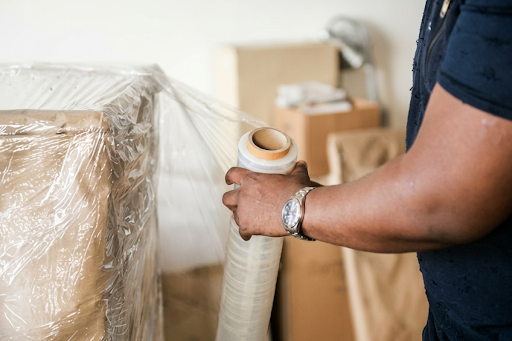
We prioritize a combination of blanket-wrapping and shrink-wrapping for maximum security. While blankets provide the necessary impact protection, the stretch wrap acts as a barrier against moisture and dust. High-value items require both layers to ensure they’re shielded from physical bumps and environmental factors.
Microfiber Barriers
For items with high-gloss finishes, such as a grand piano or polished mahogany, we introduce microfiber barriers. These non-abrasive sheets are placed directly against the surface under the standard moving pads. This prevents the "chafing" or microscopic scratching that can occur when a heavy pad vibrates against a delicate finish.
Crating Requirements
Sometimes, soft padding isn’t enough to prevent structural flexing during a long-haul trip. In these cases, we recommend specialized wooden crating for mirrors, stone-top tables, and fragile fine art. A custom crate provides a rigid skeleton that absorbs the stresses of the road, keeping the item perfectly still inside.
How do straps and E-Track systems prevent "Cargo Shift" on the highway?
Once the truck is in motion, the contents of the shipment are subject to centrifugal forces and sudden braking. To secure the entire shipment and prevent cargo shift, we use an industrial E-Track framework, which consists of metal rails bolted directly to the truck’s interior frame.
These rails serve as high-strength anchor points for every single item in the load. Additionally, temporary storage may be used as part of the moving process to protect high-value items if there are delays or special handling requirements.
The E-Track Framework
The E-Track system is an industrial metal rail network inside the truck that serves as the foundation for securement. These rails allow us to create custom anchor points regardless of the item’s size or shape. It transforms the interior of the truck into a modular, secure grid.
Ratchet vs. Cam-Buckle Straps
To lock items into place, we use high-tensile logistics straps that come in two varieties: ratchet and cam-buckle.
Ratchet straps allow us to apply the precise amount of tension needed to secure heavy furniture without crushing it. This "decking" method ensures that high-value items are physically locked to the truck's frame.
Load-Tiering
We also practice a technique called load-tiering, or "vertical stacking," to maximize safety. Heavy items are floor-loaded to create a low center of gravity for the truck.
Fragile high-value items are then "top-loaded" and strapped into their own secure zones where they cannot be crushed by other boxes.
Why is air-ride suspension critical for long-haul fragile protection?
The highway isn’t a smooth surface, and constant vibration can be the silent killer of antique furniture.
While basic protection or basic coverage is included with most moving services, it’s limited and may not be sufficient for high-value items, especially considering the risks posed by long-distance moves.
We contrast standard leaf-spring suspension with specialized systems. Air-ride suspension moving trucks use bags of compressed air to absorb road shock.
Vibration Dampening
Air-ride systems use bags of compressed air to absorb up to 90% of road shock before it reaches your cargo. Standard leaf-spring suspension can be stiff and unforgiving, transmitting every pothole directly into your belongings. Vibration dampening is the only way to ensure a smooth journey across state lines.
Protecting Joinery
Constant road vibration can "rattle" the joinery of antique furniture loose over a long trip if it isn’t dampened. Glue can crack, and dowels can shift, leading to a "wobbly" piece of furniture upon arrival. Air-ride systems ensure that furniture remains in a state of relative rest throughout the trip.
Sensitive Electronics
This technology is also vital for sensitive electronics like servers, high-end TVs, and home medical devices. At Extra Hands PGH, we understand that our clients expect these items to arrive in perfect working order.
These electronics contain delicate circuit boards and glass components that simply cannot handle the jarring of a traditional spring suspension.
Specialized Commercial and Long-Distance Solutions
When the needs of a client expand beyond residential boundaries, our expertise in commercial moving services becomes a vital asset. A professional commercial moving company knows that relocating a business or a high-end office is vastly different from a standard residential transition.
We provide a tailored commercial moving service that treats specialized inventory with much more care than a simple desk.
For those moving away from Pennsylvania, choosing the right long-distance moving company is the most important decision you’ll make.
Our long-distance moving services are designed to manage the unique stresses of multi-state travel while keeping your long-distance moving costs manageable. Whether you’re moving a few items or an entire warehouse, our team stays focused on the technical requirements of your specific cargo.
When planning a long-range move, it’s important to understand that insurance options and policies may differ depending on whether your move is within one state or crosses state lines. Regulations and coverage requirements can vary, so we help you navigate the best protection for your high-value items based on your specific move.
Planning a long-range move requires understanding how distance affects the physical integrity of your goods.
Whether you need a local crew or a specialized long distance moving company, we have the trained labor and equipment to assist. We prioritize a strategic approach to each project to ensure your transition is seamless and your budget is respected.
How do you choose between Full Value Protection and Third-Party Insurance?
Understanding the math of moving insurance is essential for protecting your financial interests. Under federal law, interstate movers must offer two different liability options referred to as valuation coverage: Full Value Protection and Released Value Protection.
The default coverage, often called Released Value Protection or protection released, is provided at no additional cost and pays only $0.60 per pound per item for damaged or lost goods. This is a select released option that offers minimal coverage and is based on the weight of the item, not its actual value.
For example, under Released Value Protection, if a 25-pound item is lost or damaged, the maximum compensation would be $15, calculated at 60 cents per pound. If a 100-pound designer sofa worth $5,000 is destroyed, you would only receive a check for $60.
Standard moving coverage typically pays around $0.60 per pound for lost or damaged items, which is often insufficient for high-value possessions.
Full Value Protection, on the other hand, covers the replacement value of lost or damaged goods in your entire shipment, making the mover responsible for the full value of all items.
This full-value coverage typically costs more than Released Value Protection, as it provides comprehensive protection based on the total weight of the shipment at a minimum of $6.00 per pound. The difference between coverage for the entire shipment versus a specific item can make all the difference in protecting your belongings.
It's important to understand that Released Value Protection is limited and requires you to sign a specific statement on the bill of lading or contract agreeing to this minimal coverage.
The "pound per" calculation means compensation is determined by the item's weight, not its actual value, so the true worth of high-value items may not be covered.
For those with high-value possessions, buying specialized insurance beyond basic liability coverage is advisable to ensure the full appraised value is protected.
Full Value Protection (FVP)
To avoid this nightmare, we highly recommend Full Value Protection (FVP). This option makes the mover responsible for the "replacement value" of any damaged or lost item. Under FVP, the mover must either repair the item to its original condition or pay for a replacement at current market prices.
Scheduled Personal Property
For items of extreme value, such as jewelry, rare coin collections, or high-end fine art, we suggest Scheduled Personal Property riders. We always advise each client to contact a private insurance agent for riders on extreme-value items. We believe in being over-insured rather than under-protected when it comes to your life’s work.
Frequently Asked Questions About High-Value Item Protection for Long-Distance Moves from Pittsburgh
What is a high-value inventory form, and why must I sign it?
This is a legal document that notifies the mover of items with extraordinary value. Signing it ensures that the mover is contractually aware of these items and is held to a higher standard of care and liability.
Does basic moving insurance cover my high-end electronics and designer bags?
Basic "Released Value" coverage only pays by weight ($0.60/lb), which is rarely enough for electronics. You must opt for Full Value Protection to ensure these items are covered for their actual replacement cost.
How does air-ride suspension differ from standard spring suspension trucks?
Spring suspension uses metal leaves that bounce with every road bump. Air-ride uses compressed air bags that provide a much smoother, cushioned ride, absorbing most of the shocks before they hit your furniture.
What is the difference between furniture padding and "custom protection"?
Standard padding involves a single moving blanket. Custom protection adds layers like microfiber sheets for gloss finishes, shrink wrap for moisture control, and corner protectors for structural integrity.
How do professional movers secure items so they don't shift on the highway?
We use E-track systems and logistics straps to bolt furniture to the interior walls of the truck. This prevents the "domino effect" where one item falling leads to a chain reaction of damage.
When is custom wooden crating actually necessary for a move?
Crating is necessary for items that are prone to structural flexing or have fragile surfaces that padding cannot protect. This includes large mirrors, marble table tops, and delicate sculptures.
What should I do if my high-value item arrives with a scratch or dent?
You should note the damage on the Bill of Lading before the movers leave and take immediate photos. Then, contact the moving company's claims department to begin the repair or replacement process.
Do I need to take photos of my items before the movers arrive?
Absolutely. High-resolution photos are your best evidence in the event of a claim. They prove the pre-move condition of the item and make the reimbursement process much smoother.
Conclusion
The success of a long-distance move is measured by the peace of mind you feel when the last box is unpacked. High-Value Item Protection for Long-Distance Moves in Pittsburgh is a complex dance of legal documentation, industrial equipment, and careful handiwork.
We believe your most precious belongings deserve a journey that’s as safe as it is efficient.
By insisting on air-ride trucks, E-track securement, and Full Value Protection, you’re taking control of your relocation.
Don’t leave your legacy to chance or a standard moving crew that doesn’t understand the $100-per-pound rule. You’ve worked hard to curate your home, and we’re here to make sure it arrives at its new destination intact.
Ready to Move Your Most Prized Possessions?
Relocating high-value assets across state lines requires more than just a truck; it requires a specialized strategy. Don’t settle for a "one-size-fits-all" approach that puts your antiques and art at risk.
At Extra Hands PGH, we specialize in the technical side of long-haul relocations for every client. Whether you need custom crating or the smooth ride of an air-ride fleet, we’re ready to protect what matters most.
Reach out to us today for a comprehensive quote, and let’s start planning your secure transition.


Comments