
How to Pack Dishes When Moving

Dishes can chip or break when they strike one another inside a moving box. Plates and bowls also become surprisingly heavy when packed together. Learning how to pack dishes when moving can help protect each piece without making the boxes too difficult to carry.
The best way to pack dishes for moving is to use sturdy boxes, wrap every item, and fill all space. Extra Hands PGH offers packing and unpacking support for homes and businesses, so reach out if you'd rather hand the packing off to an experienced crew.
The steps below cover everyday plates, bowls, mugs, glassware, wine glasses, and china.
What Makes Dishes Difficult to Pack for a Move?
Most dishes have hard surfaces and vulnerable edges. Even a short slide inside a box can cause two pieces to collide, leaving chips or cracks. Proper wrapping keeps those surfaces from touching.
Weight creates another problem. A large box filled with plates may become too heavy to lift safely or may fail at the bottom. Small or medium boxes, firm cushioning, and balanced packing can reduce these risks.
Which Packing Supplies Protect Dishes Best?
Gather your supplies before removing dishes from the cabinets. Using the right materials makes it easier to understand how to pack dishes without breaking them. It also prevents you from reaching for weak boxes or printed paper at the last minute.
Choose materials that provide both soft cushioning and firm support. Useful supplies include:
Sturdy small or medium moving boxes
Reinforced dish pack boxes
Clean packing paper
Bubble wrap
Foam sheets
Cardboard dividers
Strong packing tape
A permanent marker
Fragile and directional labels
A dish-pack box is a strong moving box made for plates, glasses, and other breakable kitchen items. These boxes often use thicker or double-wall cardboard for added strength. Some also include divided cells for glasses, cups, and stemware.
Clean dish packing paper protects surfaces without leaving ink behind. Bubble wrap and foam sheets provide added cushioning for glassware, china, and delicate pieces. Dividers keep glasses and mugs from striking one another.
Avoid newspaper or other heavily printed paper because the ink may transfer to your dishes. Valuable or sentimental pieces may need several protective layers. Packing tape should only touch the wrapping or box, never the surface of a dish.
Is Packing Paper or Bubble Wrap Better for Dishes?
Packing paper works well for most everyday plates, bowls, cups, and mugs. It is flexible, easy to shape, and useful for filling open spaces. Several sheets can be added around thin or delicate items.
Bubble wrap provides stronger cushioning for glassware, fine china, and valuable pieces. For added protection, wrap the item in clean paper before adding bubble wrap. Keep tape on the outer wrapping so adhesive never touches the dish.
What Type of Box Should You Use for Dishes?
Choose sturdy small or medium moving boxes for most everyday dishes. Smaller boxes help control the total weight and are easier to carry. The bottom should remain firm when you press on it lightly.
Dish pack boxes provide added strength for fragile tableware. They are useful for large dish collections, china, glassware, and other delicate items. Divided versions can keep cups, mugs, and stemware in separate cells.
Never use a box that is damp, crushed, torn, or weakened. Moisture can soften cardboard, while damaged corners reduce the box's strength. An old oversized box may fail even when it appears strong at first.
Check that every flap closes properly and that the sides remain square. A box that bulges before it is packed is not suitable for dishes. Replace it before adding any breakable items.
Which Dishes Should You Pack First?
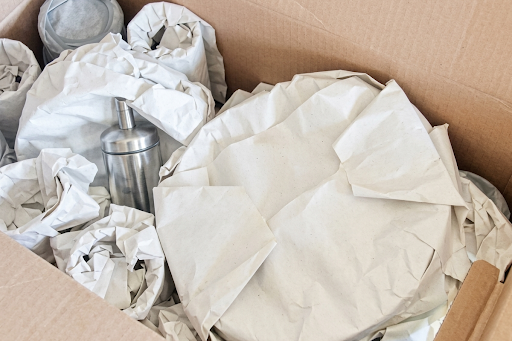
Begin with fine china, serving dishes, holiday tableware, and pieces you rarely use. Packing these items early gives you more time to wrap them carefully. It also reduces the amount of work left for the final days before your move.
Keep a small set of everyday dishes available until shortly before moving day. Wash and dry every item before wrapping it because moisture beneath the paper may cause odors or marks. Sort the dishes by type and size to make packing easier.
Review your collection as you work. Donate usable dishes you no longer want and discard broken items that cannot be used safely. Moving fewer dishes saves packing time and box space.
Is Your Dish Box Ready for Packing?
Reinforce the bottom seams with strong packing tape before adding any dishes. Use several strips across the center seam and supporting edges. The base should stay flat when you press on it lightly.
Add a thick, even layer of loosely crumpled packing paper. Make sure the cushioning reaches every corner and covers the complete bottom. This layer helps absorb movement and keeps the first dishes away from the box floor.
Check the box again before packing. It should feel firm, dry, and strong enough for the expected weight. Replace it if the bottom bends, separates, or feels weak.
What Is the Safest Way to Wrap Individual Dishes?
When learning how to wrap dishes for moving, begin with one dish at a time. Place the item in the center of several sheets of clean packing paper. Fold the paper over the surface until every face, edge, and corner is covered.
Wrap each dish separately before placing it in the box. Direct contact between hard surfaces can cause chips and cracks during transportation.
Thin, valuable, or sentimental pieces should receive another layer of paper, foam, or bubble wrap.
Similar dishes may be placed into small bundles after each one has been wrapped. Keep the pieces close in size so pressure is distributed evenly. Add another sheet of paper around the finished bundle before packing it.
Should Plates Be Packed Flat or on Their Sides?
Wrapped plates should generally be packed vertically, like records standing in a box. This position places less direct pressure on the lower plates. It also helps the pieces handle bumps during transportation.
Knowing how to pack plates for moving begins with wrapping every plate separately. Group similar sizes together and place them upright in a snug row. Add cushioning between the plates and every wall of the box.
Packing plates for moving does not mean forcing as many as possible into one container. The plates should fit securely without being squeezed together. Fill open areas with paper so the row cannot lean or shift.
Can Several Plates Be Wrapped Together?
Wrap every plate on its own before creating a small bundle. Place a few similar-sized wrapped plates together and cover the group with another sheet of paper. Keep the bundle small enough to lift and position without losing control.
Thin, valuable, or sentimental plates should remain separate. Give each piece extra padding and avoid placing it in a tight group. This reduces pressure on delicate edges and surfaces.
What Keeps Bowls From Cracking in Transit?
Packing bowls for moving requires protection around the rims and curved surfaces. Wrap each bowl separately and make sure the paper covers the entire rim. Place loosely crumpled paper inside deep bowls for added support.
Bowls can be nested when padding separates every piece.
Never allow two unwrapped surfaces to touch. Stop nesting if the stack becomes tight or places pressure on the bowls.
Curved spaces can hide gaps that allow movement. Fill the open areas around and above the bowls with paper, foam, or bubble wrap. The pieces should remain still without being packed under heavy pressure.
Do Mugs and Cups Need Special Protection?
The handle is usually the weakest part of a mug or cup. When learning how to pack mugs for moving, place loosely crumpled paper inside each mug and wrap the handle first. Cover the complete item with another layer before placing it in the box.
The same method applies when deciding how to pack cups for moving. Pack each cup upright whenever possible and use dividers to prevent contact. Keep heavy items away from the handles.
Do not use handles to lift or pull wrapped mugs from the box. Hold the body of each piece instead. This keeps pressure away from the narrow connection points.
Which Packing Method Works Best for Glasses?
Understanding how to pack glassware for moving starts with individual wrapping. Place a small amount of loosely crumpled paper inside each glass without pushing against the sides. Wrap the outside and cover the rim completely.
Use a divided cell box when possible. Place each glass upright in its own section and add soft cushioning around it. Do not pack the material so tightly that it presses against the glass.
Keep glassware separate from heavy plates, cookware, and serving dishes. Heavy items can shift and place too much pressure on thinner glass. Fill every open space so the glasses cannot tip or strike the dividers.
Can Wine Glasses and Stemware Go in a Regular Box?
A divided glassware box provides the best support for most wine glasses and stemware. Learning how to pack wine glasses for moving means protecting the narrow stem without placing pressure on it. Wrap the stem first, followed by the bowl and base.
Place each wrapped glass upright in its own cell. Add enough cushioning to prevent movement while keeping the pressure light. Never place another item on top of a stem.
A sturdy regular box may work when proper dividers and padding are added. Valuable stemware may need extra wrapping or a second protective box. The inner box should be cushioned on every side inside the larger one.
What Extra Steps Protect China and Valuable Dishes?
Knowing how to pack china for moving requires more time and protective material. Wrap every item separately with several layers of paper, foam, or bubble wrap. Keep fine china away from heavy everyday dishes.
Use smaller reinforced boxes to control the weight. Place foam sheets or bubble wrap between delicate surfaces and around decorated edges. Make sure the pieces cannot touch the box walls.
Photograph or list valuable pieces before packing them. This creates a record of the collection and helps you check every item during unpacking. Professional help may be useful for a large, valuable, or sentimental collection.
The same careful method applies when deciding how to pack fragile dishes of any type. Thin glass, handmade pottery, and antique tableware may need extra layers. Avoid bundling delicate pieces when separate packing provides better protection.
Where Should Each Type of Dish Go in the Box?
Place heavier and sturdier dishes toward the bottom. Keep lighter pieces in a separate box or a well-protected upper section. Never place delicate glassware beneath heavy plates or serving bowls.
Distribute the weight evenly from side to side. A box that is much heavier on one side is harder to carry and more likely to tip. Add cushioning as you build each layer.
Do not mix unrelated dish types just to fill space. Glasses, mugs, bowls, and plates need different support. Every piece should be separated from other dishes and the box walls by protective material.
Can Empty Space Cause Dishes to Break?
Yes, space allows dishes to slide, collide, and crack. Even carefully wrapped pieces can be damaged if they move across the box. Check the sides, corners, and spaces between every item.
Fill gaps with crumpled packing paper, bubble wrap, or foam. Add enough material to stop movement without creating heavy pressure. Pay close attention to hidden spaces around bowls, mugs, and glasses.
Finish with a thick layer of cushioning across the top. The box flaps should close naturally without pressing down on the dishes. If you must force the box shut, remove an item or reduce the top layer slightly.
Is the Box Secure Enough to Seal?
Perform a gentle movement test before sealing the box. Hold it carefully and listen for rattling or shifting. Add more cushioning if you hear or feel movement.
Check that the box remains square and does not bulge. The flaps should close flat without pressing on the contents.
A rounded or strained box may contain too many items.
Lift the box slightly to test its weight and bottom support. Divide the contents between two boxes if one person cannot handle it safely. A lighter box is easier to control and less likely to fail.
Seal every seam with strong packing tape. Add extra strips across the bottom if the box feels heavy. Do not rely on folded flaps alone to hold the dishes.
Which Labels Belong on a Box of Dishes?
Label the top and at least two sides of every box. Use clear terms such as "Fragile," "Kitchen," "Dishes," and "This Side Up." Marking several sides keeps the instructions visible when boxes are stacked.
Add a more specific description when useful. Labels such as "Dinner Plates," "Coffee Mugs," or "Wine Glasses" make unloading and unpacking easier. Clear descriptions also help movers keep delicate boxes away from heavy items.
Draw upward arrows on more than one side. The direction should remain easy to see inside a crowded truck. Good labels support careful handling, but they do not replace proper wrapping and cushioning.
Where Should Dish Boxes Go in the Moving Truck?
Keep dish boxes upright during loading and transportation. Place them on a flat, stable surface where they cannot tip or slide. Do not turn them on their sides to fit a small space.
Avoid stacking furniture or heavy boxes on top of dishes.
Even a reinforced box can collapse under too much weight. Place only light, stable boxes above them when necessary.
Secure the surrounding items so they cannot fall against the dish boxes.
Fill open truck spaces or use straps to prevent movement when the vehicle turns or stops. Keep metal parts and sharp furniture edges away from the cardboard.
Dish boxes need extra planning during a longer trip. More time on the road means more vibration and more chances for items to shift. Firm cushioning and secure placement help keep the boxes stable.
Which Dish-Packing Mistakes Cause the Most Damage?
Many broken dishes result from a few avoidable mistakes. Check each box before sealing it and correct anything that could allow movement. Fixing a small problem now is easier than finding broken dishes later.
Common dish-packing mistakes include the following:
Using damaged, damp, or oversized boxes
Placing unwrapped dishes together
Stacking plates flat instead of vertically
Leaving open gaps inside the box
Mixing heavy dishes with delicate glassware
Overloading the box
Packing fine china with heavy everyday dishes
Allowing dish surfaces to touch
Forgetting to mark the upright direction
Using printed paper that may transfer ink
Placing tape directly on a dish
Forcing the top flaps closed
Do not assume a fragile label will protect poorly packed contents. The wrapping and cushioning must keep the dishes from moving. Labels only tell the people handling the box to use added care.
Can You Pack Dishes Without Packing Paper?
Clean dish towels, soft cloths, and plain recyclable paper can protect some everyday dishes. These materials may be useful when you want to reduce waste or use supplies already at home. Every alternative should be clean, dry, and free from rough seams or fasteners.
Fabric may shift and take up more space than packing paper.
Thin shirts and other light clothing may not provide enough protection for fragile pieces. Avoid using clothing with buttons, zippers, hooks, or decorations that could scratch a dish.
Purpose-made paper, foam, and bubble wrap remain better choices for china, glass, and sentimental items.
They provide more even coverage and are easier to shape around edges. Do not risk a valuable piece simply to save a small amount of packing material.
What Should You Do When Unpacking Dishes?
Place the box on a stable surface before opening it. Check that the label faces upward, and slowly remove the top cushioning. Do not reach deep into the box before you can see the first layer.
Lift and unwrap one dish at a time. Inspect each item for chips, cracks, or broken handles before placing it on a counter.
Keep wrapping material out of walkways as you work.
Wash the dishes before putting them away or using them. Packing materials may leave dust or small paper fibers on the surfaces. Set aside clean paper, bubble wrap, foam, and sturdy boxes for reuse.
If you find damage, keep the broken piece and its wrapping together. Photograph the item, box, and cushioning before throwing anything away. These details provide a record of how the dish was packed and transported.
When Is Professional Dish Packing Worth Considering for Long Distance Moves?
Hiring help may be useful when you have a large collection, fine china, limited mobility, or a short deadline. It can also help when many fragile kitchen items must be prepared at once. Full service moving can include packing and loading, but you can also ask whether partial packing is available.
Pittsburgh residential movers may offer packing as part of a household move. Confirm which materials and packing tasks are included before scheduling the work. Some companies also offer labor-only help if you are using your own truck.
Give the crew advance notice about china, stemware, handmade pottery, or other valuable pieces. Specialty moves can also include items such as pianos and hot tubs.
Professional packing may be helpful when you're also arranging long distance moving services. A longer trip gives boxes more time to experience vibration and shifting. That doesn't mean every household needs it, but it's worth asking about if your move is complicated by distance or a tight timeline.
Established moving companies bring hands-on experience with exactly this kind of packing.
Frequently Asked Questions
What Is the Best Way to Pack Dishes When Moving?
Use a sturdy small or medium box, wrap every dish separately, and fill all open space with cushioning. Pack plates vertically, keep glasses upright, and test the box for movement before sealing it.
Should Plates Be Packed Vertically or Horizontally?
Wrapped plates should generally be placed vertically like records. This position reduces direct pressure on the lower plates and helps them handle movement during transportation.
What Type of Box Is Best for Packing Dishes?
A sturdy small or medium moving box works for many everyday dishes. Reinforced dish-pack boxes provide added strength for fragile, valuable, or heavy tableware.
Should Every Dish Be Wrapped Separately?
Yes, each dish should have its own protective layer. Separately wrapped plates of similar size may then be placed in small bundles with another sheet around the group.
Can You Pack Dishes Without Packing Paper?
Clean towels, soft cloths, and plain recyclable paper can protect some everyday items. Purpose-made packing materials are a better choice for glass, china, and valuable dishes.
Is Packing Paper or Bubble Wrap Better for Dishes?
Packing paper works well for most plates, bowls, cups, and mugs. Bubble wrap provides more cushioning for glassware, fine china, and delicate pieces.
How Do You Pack Glasses and Wine Glasses for Moving?
Wrap every glass separately and use divided cells when possible. Protect wine glass stems before wrapping the bowl and base, then place each piece upright.
How Do You Stop Dishes From Moving Inside a Box?
Fill spaces along the bottom, sides, corners, and top with crumpled paper, bubble wrap, or foam. Test the box gently and add more cushioning if anything rattles or shifts.
How Heavy Should a Box of Dishes Be?
There is no single weight that fits every person or box. The container should remain square, the bottom should stay firm, and one person should be able to lift it safely.
When Should You Hire Professionals to Pack Dishes?
Consider hiring extra help for large collections, fine china, valuable glassware, limited mobility, short deadlines, or long-distance moves. An experienced Pittsburgh moving company can also help when you want only the kitchen or fragile items packed.
What Is the Best Way to Keep Dishes Safe During a Move?
The safest process comes down to three rules: use a sturdy box, wrap every dish, and eliminate empty space. Keep plates vertical, glasses upright, and heavy items away from delicate pieces.
Label each box clearly and secure it on a flat surface in the moving truck.
Extra Hands PGH offers packing and unpacking support for homes and businesses.
Contact our team to talk through your belongings, packing needs, schedule, and moving plan, and we'll help you figure out what makes sense for your move. If your timeline doesn't line up, ask us about storage options too.


Comments